Two students can agree to the same session from different screens. Here is how I designed that handoff, what we changed after testing and what I checked in the final browser release.
Make the next step clear. Keep the previous one safe.
01 / Intent & ownershipDesign → implementation
A phone experience, redesigned from the ground up.
The team began with hand-drawn, low-fidelity web sketches. Following professor feedback, we shifted to a phone app. I redesigned the complete mobile UI/UX and selected its palette and visual system.
I worked on matching, profiles, the relational model and booking. In the final sprint I made questions and offers discoverable across one to five communities, added an optional photo, tightened the cards and simplified the Communities list.
Judy Gao implemented contextual conversations and session management. I reviewed and merged that work, then verified the result from two accounts. Judy and Jiumo Li conducted our formative usability sessions.
One person can need help and offer it.
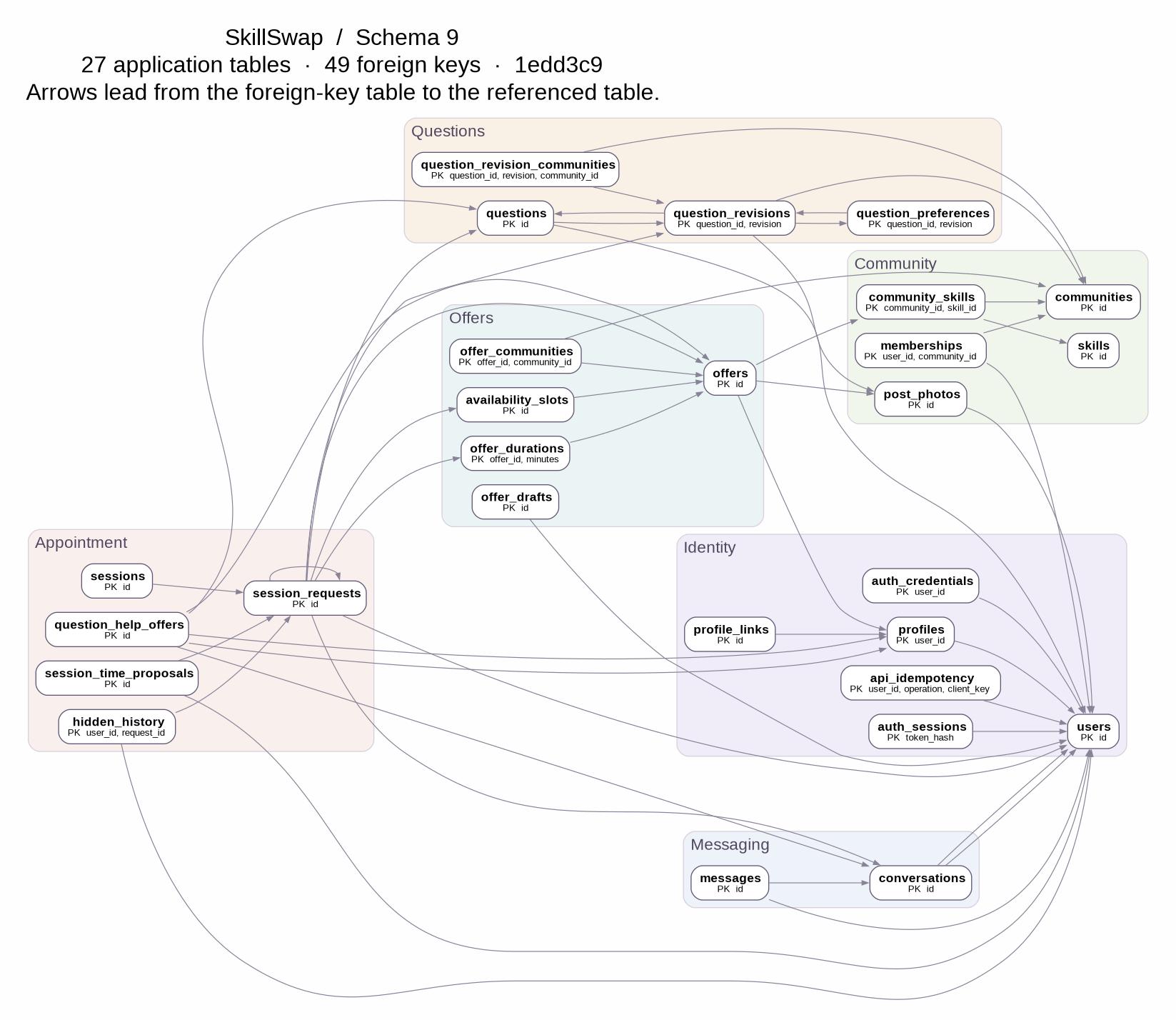
A single account can take either role. Each request records who asked for help, who offered it and which published question it concerns.
Start with the relationship.01
02 / Booking logicBehavior before decoration
A request is a question. Acceptance is a commitment.
A pending request leaves both calendars free. When the helper accepts, the server checks both calendars and reserves the time.
01PendingWaiting for the helper
02ConfirmedBoth calendars checked
03CancelledTime released, history kept
Check again at acceptance.
Two pending requests may appear feasible. At acceptance, the server rechecks confirmed sessions for both people, in either role. An overlap blocks confirmation. Cancellation releases that interval.
Acceptance sequenceExplanatory pseudocode
// One decision, one transaction
begin transaction
  lock both participant identities in fixed order
  verify helper + pending request
  recheck both calendars for confirmed overlaps
  accept request + create session atomically
commit
The sequence condenses the acceptance transaction. Production-scale load testing remains open.
01 Preserve what was agreed
A request references a published question revision and captures reviewed time, duration and price. Editing availability retires obsolete active slots while preserving historical versions and earlier booking terms.
02 Change a pending request safely
A revision withdraws the old request and creates a linked pending replacement in one transaction. If the replacement fails, the original stays pending. New terms require a fresh helper decision.
03 Relax preferences with explicit consent
Matching considers community, skills, duration, format, budget and the full time window. Same-skill alternatives can explain mismatches. Adjustable preferences require request-level consent; ownership, scope, current revision, supported terms, server-derived price and confirmed-session conflicts remain enforced.
04 Make retries harmless and access intentional
Stable retry keys distinguish a repeated submission from changed intent. The server validates the reviewed price against the offer. Authorized actors alone can edit, decide or cancel; private booking details and messages are restricted to participants.
05 Keep a time change in the same conversation
Peers can contact each other about a question or offer before booking. Once a session is confirmed, either participant can propose a new time. The existing time stays in place until the other person agrees. The conversation keeps the proposal, response and booking events together.
Follow one booking through the data. Community tags connect students to an offer. A request pins the version of the question and the terms both peers reviewed. The confirmed session, its events and the two-person thread carry that context forward.
03 / Human + AI-assisted testingOctober–November 2026
A passing check is not an effortless experience.
We compared real participant observations with AI-assisted browser checks and a local-model pilot. The difference changed what we prioritized: a working booking engine still needed clearer discovery, terms and recovery.
Three formative human sessions
Where people hesitated.
The October 26 session covered A–B with moderator help. The October 31 session attempted A–F, with overlapping task boundaries and an inconclusive conflict fixture. In the later hosted follow-up, a student found a skill swap and sent a request, then edited their question when the task called for changing the pending booking. That distinction informed our revised activity routes.
What it revealed: discoverability and interpretation that a script with known routes could bypass.
AI-assisted functional evidence · F01
What the system saved.
The October 31 Playwright/Chromium walkthrough reported six scoped functional checks passing: availability, reviewed booking differences, time/status display, pending revision, helper acceptance and conflict recovery.
What it revealed: persisted records and protected booking rules, plus a duplicate conflict message. It did not measure independent user success.
QuestionHuman observationAutomated check
Can you find the next step?
Owned activity and public previews were difficult to locate.
Known selectors and routes reached the target screens.
Do the terms make sense?
Rate, duration, total and request stages needed clearer hierarchy.
Reviewed differences and status labels were present and saved.
Can you recover safely?
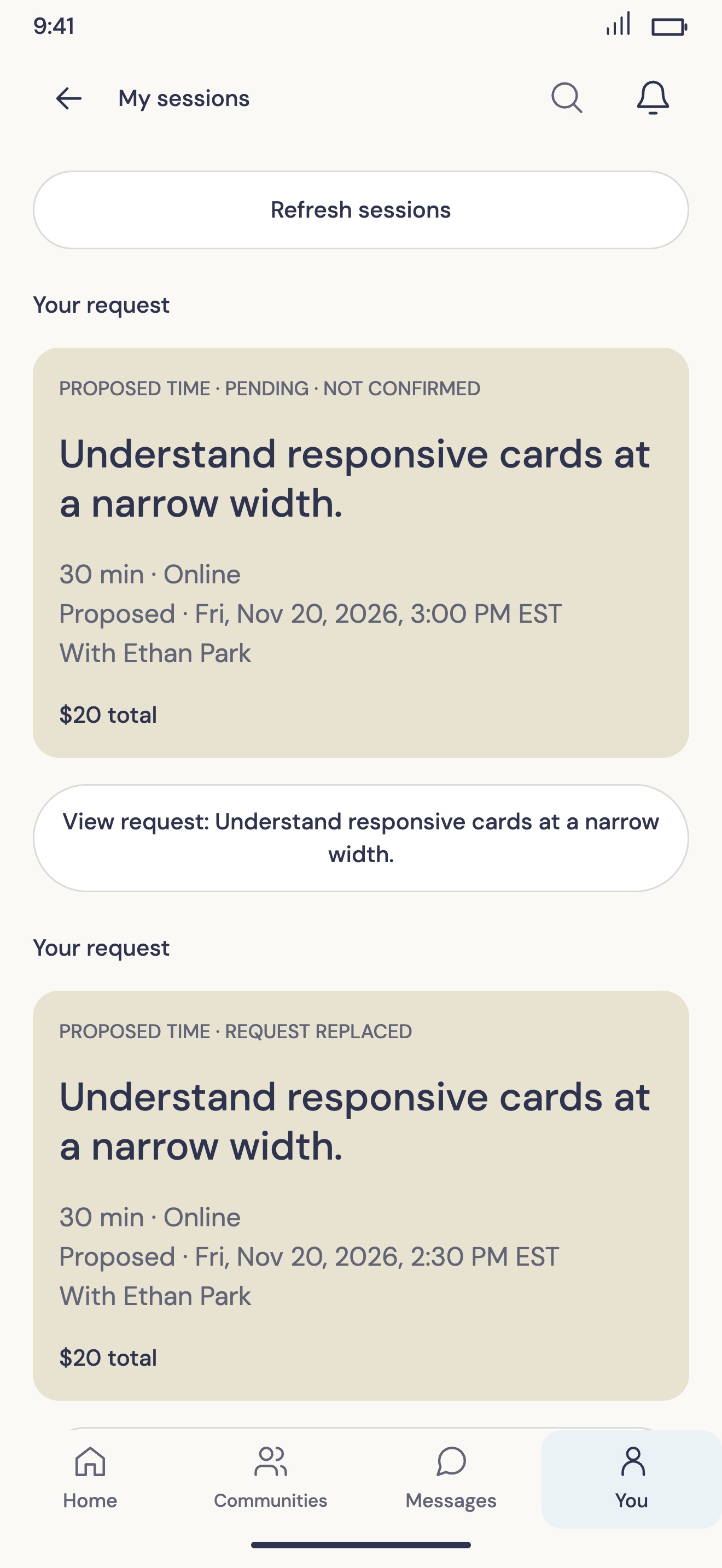
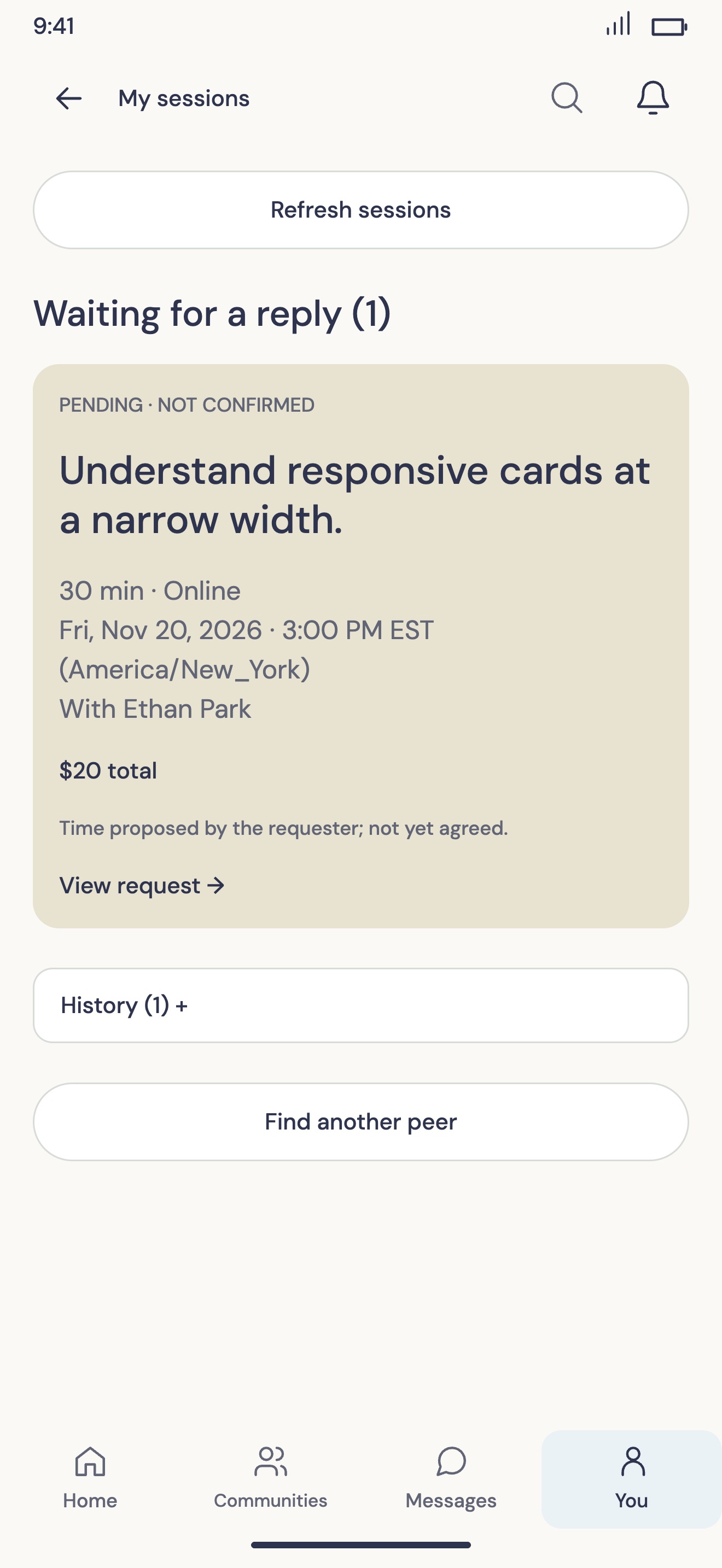
Current requests and older history could be hard to distinguish.
Replacement links persisted; overlap rejection preserved the reservation.
Before · Current and replaced mixed together
After · Current first, history on demand
Historical October 31 build → repair snapshot. Re-captured November 13 with matching fictional fixtures at the same phone viewport. These technical reproductions are separate from participant-test evidence and the latest hosted release.
A test script knew which screen to open. The student had to decide which record to change.
Turn evidence into a design decision.
01
Expose owned activity.
Make questions, offers and current requests easier to reach; preserve public-preview access.
02
Separate present from history.
Use Pending, Confirmed and expandable History groups without deleting earlier terms or decisions.
03
Make review and recovery explicit.
Show duration, rate and total together, preserve drafts, and give users a reachable way to resume. Technical regression and a later human retest answer different questions.
Read the research limits +
J01 and J02 used different builds and task coverage. Assistance, unclear scales and missing timings prevent a pooled unaided-success rate or speed comparison.
F01 used prepared records for D/E/F, rather than one uninterrupted booking lifecycle. Its report was published; raw supporting artifacts were still upload-pending in the reviewed snapshot.
Maya, Ethan, Lina, Alex and Samantha informed analysis. They were five persona lenses, not five executed simulated-user sessions.
The unsuccessful M01 local-model pilot supplies method limitations, not product task failures. No completed MatrAIx session was established in the located records.
A later November 1 supplement documents J03, a third partial, assisted human session. Its question-preference edit is not evidence of Pending-booking rescheduling; A/E/F were not documented. No raw participant identities, quotes or recordings are published here.
Figma shaped the mobile visual system. React Native, Expo, Expo Router and TypeScript connected the screens; the browser delivery uses React Native for Web. A Node HTTP API and relational persistence support shared records and booking decisions.
Explore a local model, then test the connection.
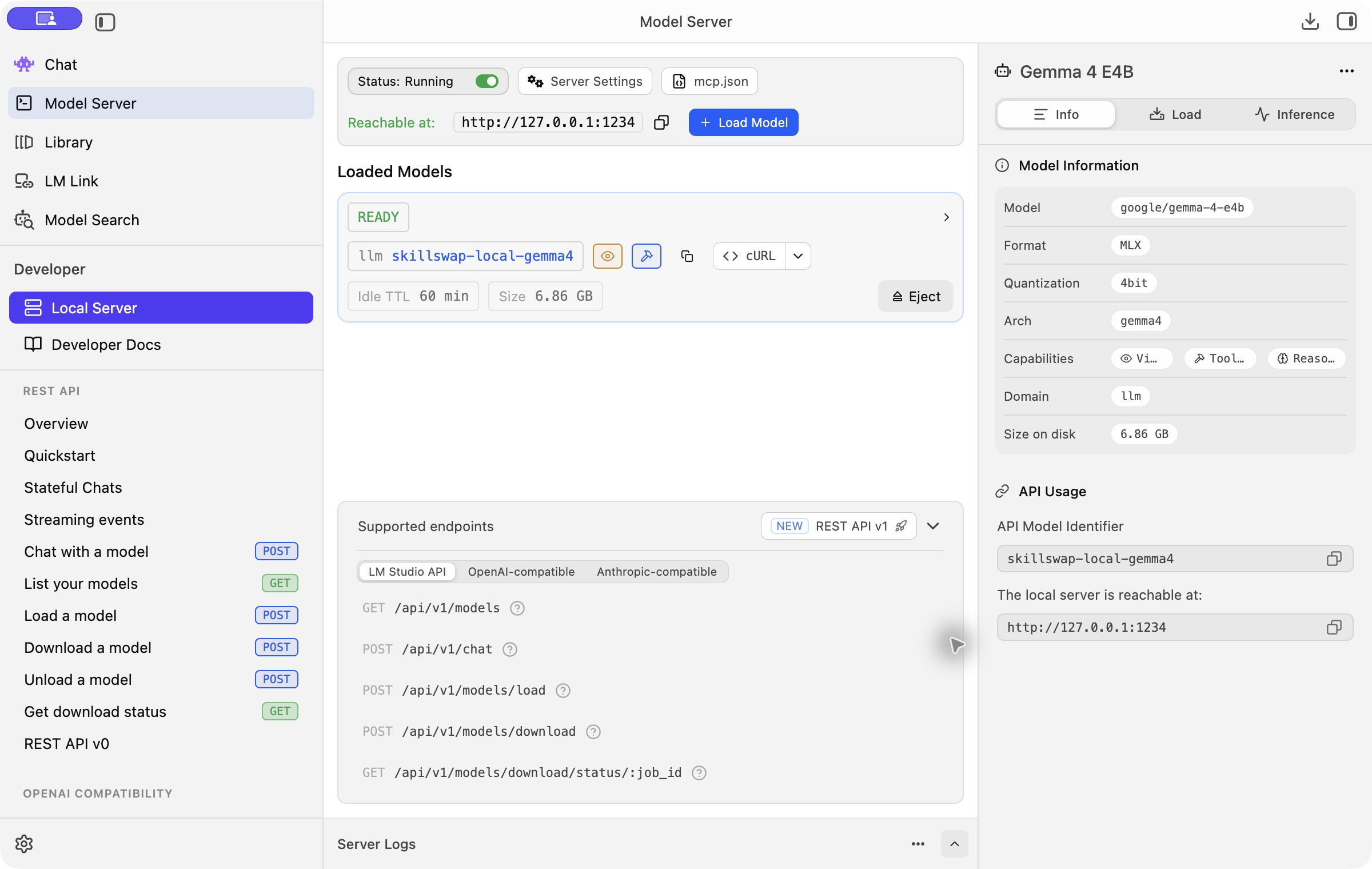
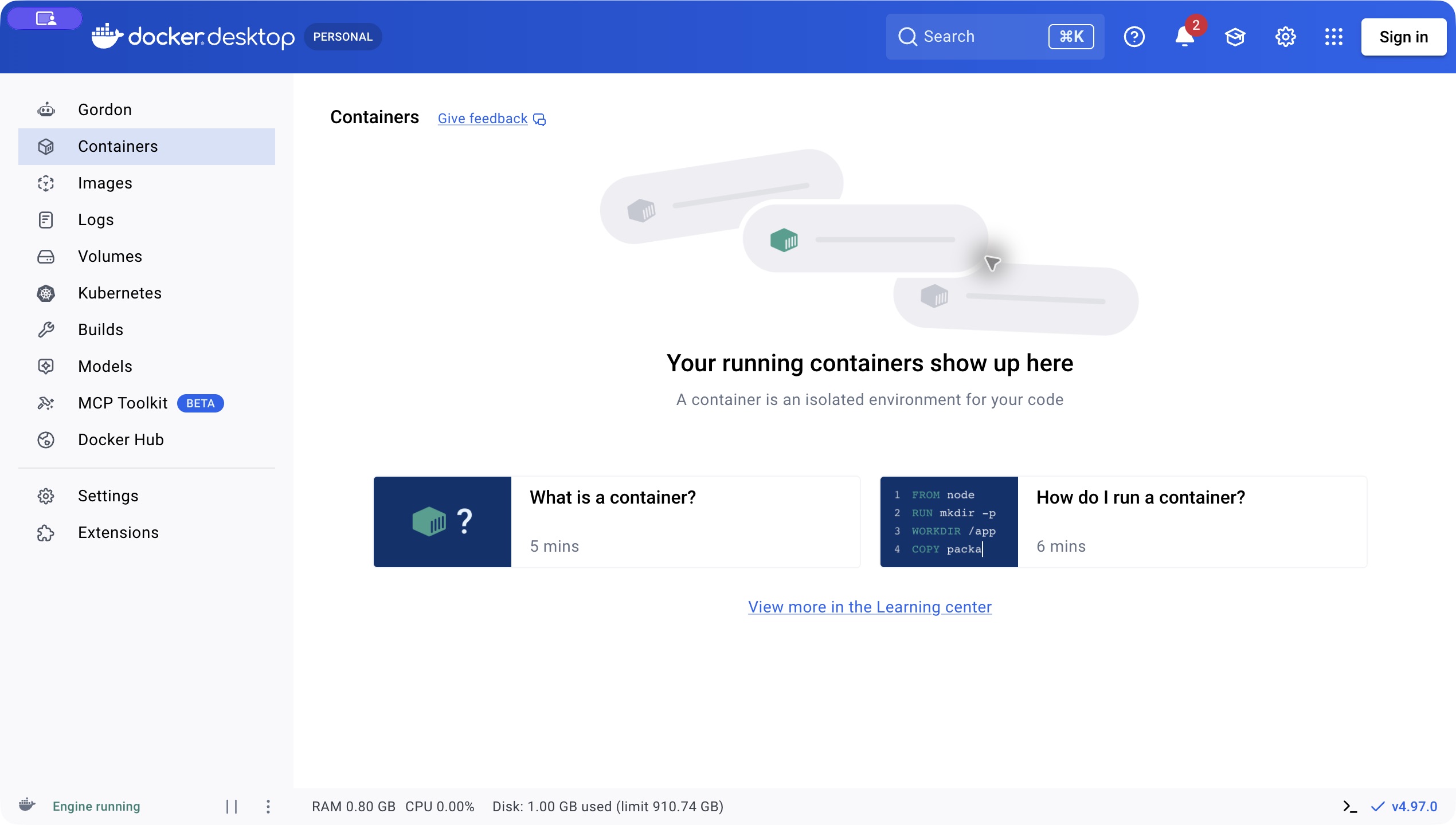
I configured LM Studio with Gemma 4 E4B and a local API, alongside Docker Desktop. The October 31 record verifies model listing, text responses, structured tool calls, argument handling, tool-result responses and Docker-to-host API connectivity.
LM Studio · Local API setup, October 31Recorded setup, not a completed persona study. Open image ↗
A successful API call was one gate.
The host survey adapter rejected its json_object response format with HTTP 400. Browser-agent operation was a separate path that still needed verification. I kept the successful connectivity checks and the incomplete simulation distinct.
The API stayed on localhost. No paid cloud key or participant data is exposed in this public record.
Inspect the Docker setup capture +
Docker Desktop · October 31The image shows engine status; the separate logs verify container/API connectivity.
Make each revision reviewable.
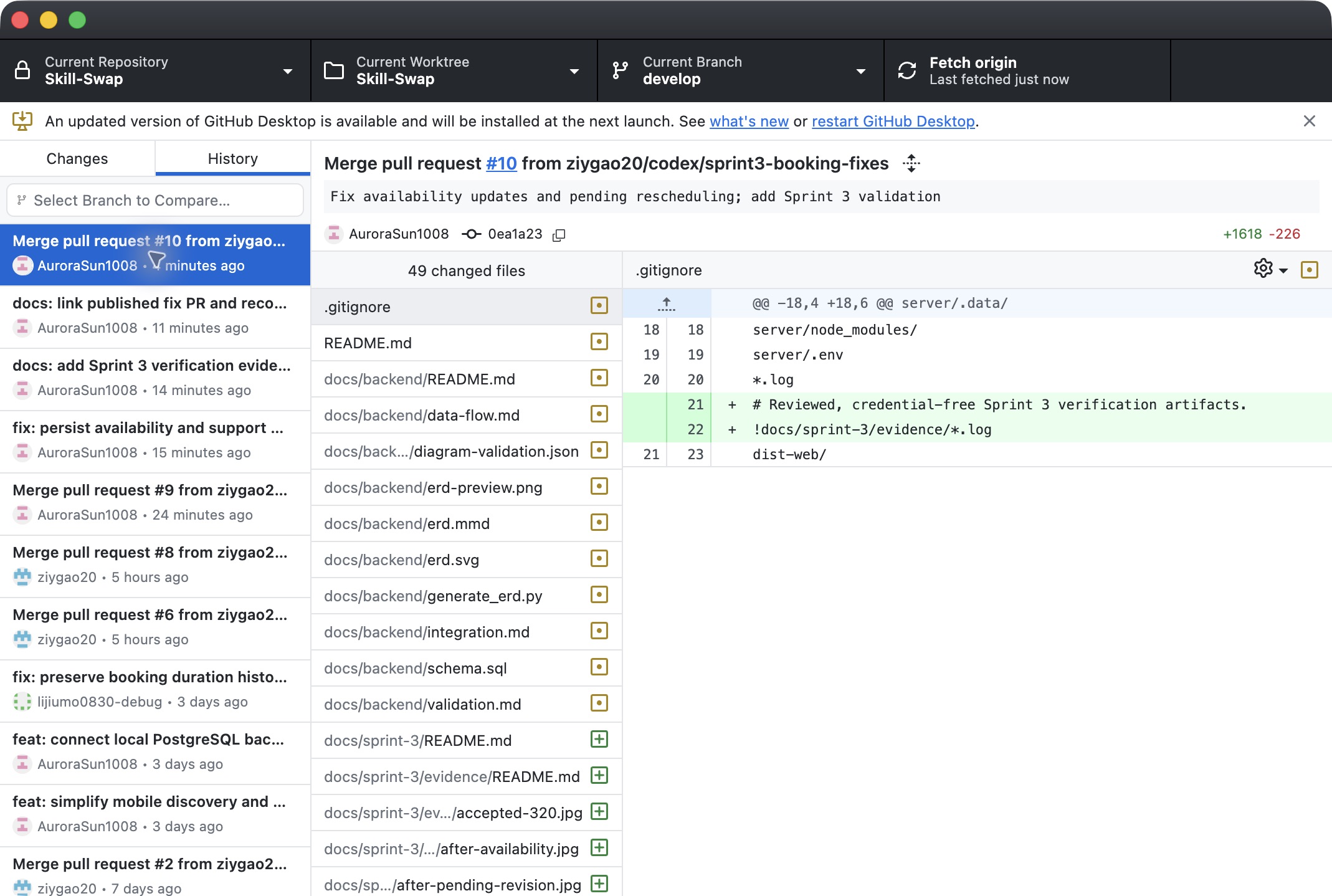
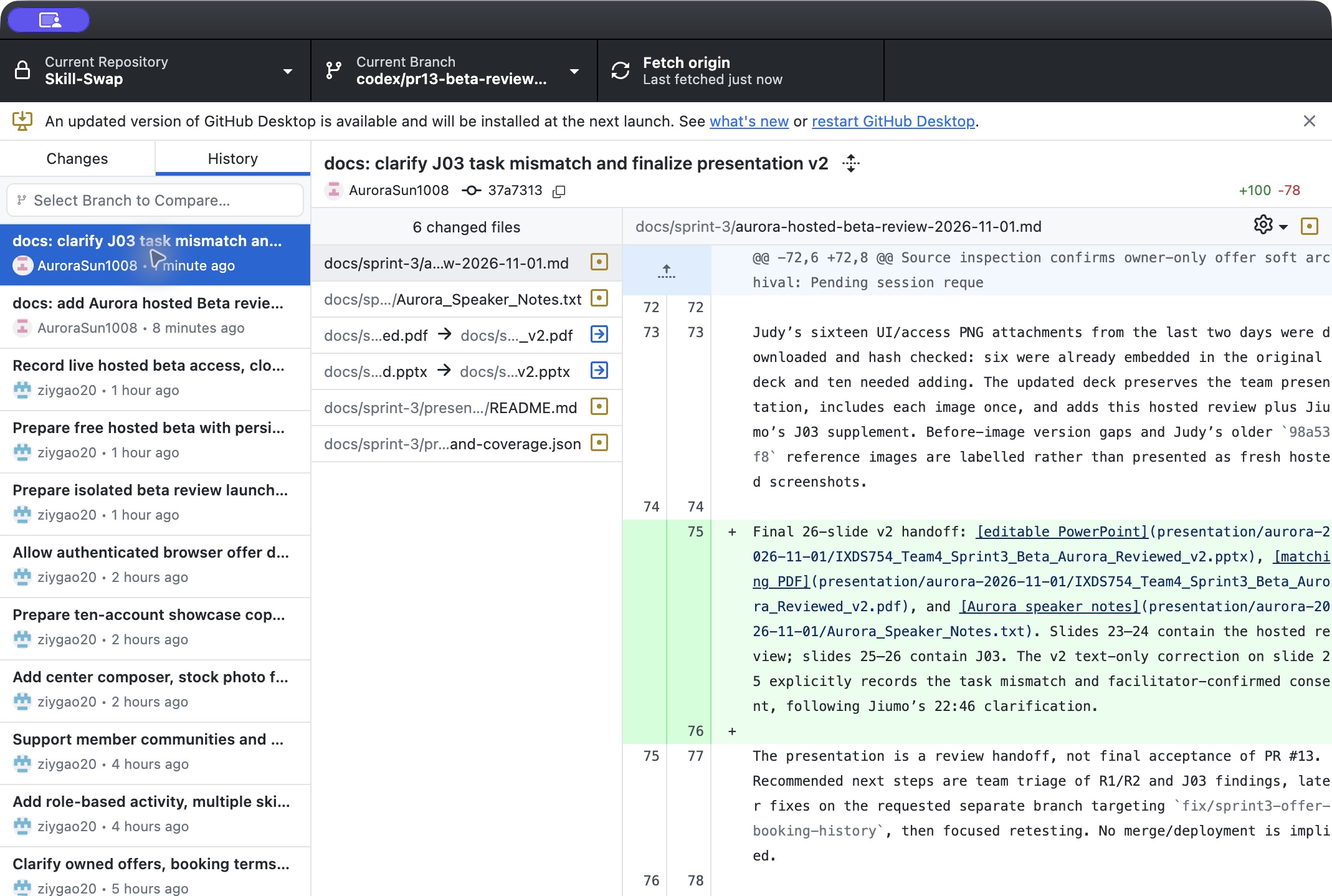
I used GitHub Desktop to inspect changes, follow branches and merges, and keep code revisions connected to test evidence. Teamwork organized sprint tasks; Codex assisted development and review. Recorded requirements and checks determined what could be claimed.
Integration history · PR #10 mergeMobile UI and booking work in the source history. Open image ↗Review & handoff · November 1Separate review-branch evidence, not final release approval. Open image ↗
01
Web concept → mobile system
Teammates’ paper sketches established the early web concept. After professor feedback, I redesigned the mobile UI and chose its colors.
02
Mobile Alpha → recoverable booking
Availability versions, explicit preference consent and transactional pending replacement connected interface choices to reliable data.
03
Human findings → Beta revisions
Activity access, review hierarchy and request-history grouping evolved through findings, team feedback and separate regression checks.
The final browser client talks to a Node.js API backed by PostgreSQL on Render. The local review package runs on Node.js 24 with PGlite. Each fresh launch seeds a fictional dataset so an evaluator can repeat the same two-account flow.
A tool is part of the process, not proof of the outcome.04
05 / VerificationDated records, bounded claims
Test the rules. Record the limits.
On November 15, I followed a single 30-minute skill swap from discovery to a saved conversation. Two isolated browser sessions let me check exactly what the requester and helper each saw.
Final browser release
158 of 158 frontend/source checks37 of 37 backend checks
TypeScript passed. On Render and in a freshly unpacked local build, a second shared community tag surfaced the helper. The request stayed Pending until acceptance. Both people saw Confirmed and both messages after a reload.
Passing records also include TypeScript checks and web, iOS and Android JavaScript exports. Two-account browser walkthroughs covered availability, explicit consent, pending replacement, helper-only acceptance, history and persistence after restart.
Revision 5c19efb · PR #10
Hosted Beta review
148 source tests27 HTTP / PGlite groups
Recorded as passing alongside TypeScript checks. The hosted browser review checked publication and reload, revised requests, two-account acceptance, confirmation and two-way messages.
Reviewed source c08a253 · Evidence dfaf1fd
Preserve existing bookings during an upgrade.
I rehearsed PostgreSQL 16 from schema 7 to 9 and PGlite from 8 to 9 with existing data. Both preserved active and cancelled booking IDs, agreed terms, sessions and a saved conversation.
Check the entry screens at three widths.
Guest profile, sign-in and create-account views fit at 320, 390 and 1280 CSS pixels. All nine screen-and-width combinations fit without horizontal scrolling. Tab and Enter reached the account controls, with visible focus on the inspected targets. White text on the clay button measured 5.53:1.
Open release questions +
A fresh participant study of the revised release remains open. Our November 15 runs used prepared accounts in Chromium.
Physical iOS and Android, Windows launch, full keyboard booking, screen readers, zoom and other browser engines still need verification.
The free hosted service can take time to wake. Concurrent traffic at production scale remains unmeasured.
Payment collection, built-in calls and push notifications remain outside the course release.
Make the evidence useful by keeping it specific.05
06 / Source ledgerRead with context
Behind the notes.
The November 15 release record identifies the final build. The earlier entries explain how the booking rules and interface evolved.
docs/sprint-3/session-1-judy-AB-report.mdsession-2-judy-AF-report.md · functional-verification-001/REPORT.md · consolidated-findings-matrix.md, reviewed November 1.
Local-model setup
October 31 setup logs record the local Gemma model, structured tool calls and the adapter error. The final Process Book records three formative human sessions and an incomplete MatrAIx pilot.
Design & media attribution
I designed the mobile UI and palette, wrote the Vision Video script and captured the six release walkthrough screens. My teammates supplied the original web sketches. Jiumo Li recorded the first Maya/Alex sequence and shaped the rough cut and sound. Judy Gao recorded additional app footage, narrated and edited the final film.
This is a public, edited summary. Account credentials, participant identities and private participant records are excluded.